Associate Professor
BASc (Windsor) and PhD (Calgary)
Office: KAIS 4038
Phone: (604) 827-5987
Email: konradw@ece.ubc.ca
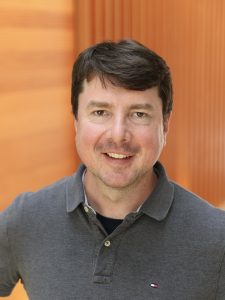
Konrad Walus is an Associate Professor in the Department of Electrical and Computer Engineering. He received his Electrical Engineering degree from the University of Windsor in 2001 and completed his PhD in electrical engineering at the University of Calgary, in 2005.
Dr. Walus’ research focuses on the applications of nanotechnology in electronic devices. As an example, he is investigating the application of molecular devices as an emerging computational nanotechnology, as well as the application of nanostructured materials in bio- and gas sensing. In order to exploit the novel properties of nanostructured and organic materials at the micro-scale, Dr. Walus and the other members of the MINA team are also applying novel inkjet micropatterning techniques to fabricate micro-devices using functional “inks” consisting of composites of organic polymers infused with nanostructures in order to augment and enhance performance while also reducing cost. His specific research interests include electronic devices based on molecular quantum-dot cellular automata (QCA) and electronic devices fabricated using inkjet micropatterning including printed sensors, transistors, and LED’s.
Research Interests
Nanoelectronic devices and circuits, quantum-dot cellular automata, single-electron transistors, quantum mechanical simulations
Research Areas
Research Group
Teaching
- EECE 576 – Semiconductor Theory for Device Applications
- ELEC 461 – Nanotechnology in Electronics
- Electrical Engineering Seminar and Special Problems – CHEM SENSNG TECH
- ELEC 361 – Molecules to Mechanisms
- EECE 301 – Topics in Nanotechnology and Microsystems
- ELEC 311 – Electromagnetic Fields and Waves
- CPEN/ELEC 400U – Undergraduate Research Experience Program (UREP)