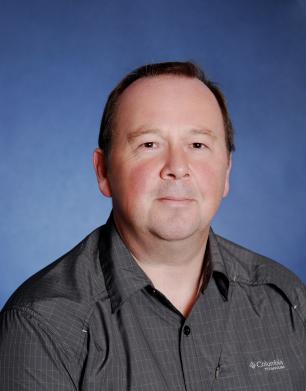
Associate Professor Teaching
P.Eng, C.Eng
Office: KAIS 3027
Phone: (604) 827-5501
Email: pauld@ece.ubc.ca
Paul Davies is an Associate Professor Teaching in the Department of Electrical and Computer Engineering at UBC. His interests lie in the design and development of safety critical, real-time systems, software engineering principles, computer architecture and the application of FPGA technologies for use with soft-core processors. His teaching interests include, programming (assembler/C/C++), Digital systems design, Concurrent and Multi-threaded software, real-time operating systems, software engineering, UML, microcomputer systems design and computer architecture.
Paul Davies is the author of the “Indispensable Guide to C” and has acted as a reviewer for several books and articles on C/C++ programming. In addition, he has been employed as both a hardware design engineer and as a software consultant for a number of embedded real-time projects and has developed and delivered several professional software training courses run for the benefit of industry. He is a Professional Engineer (P.Eng), a Chartered Engineer (C.Eng) and a Member of the Institute of Engineering Technology (MIET).
Research Group
Teaching
- CPEN 211 – Introduction to Microcomputers
- CPEN 312 – Digital Systems and Microcomputers
- CPEN 333 – System Software Engineering
- CPEN 391 – Computer Systems Design Studio II
- CPEN 412 – Microcomputer System Design
- ELEC 491 – Electrical Engineering Capstone Design Project
- ELEC 492 – Electrical Energy Systems Capstone Design Project
- CPEN 492 – Software Engineering Capstone Design Project
- ELEC 493 – Nanotechnology and Microsystems Capstone Design Project
- ELEC 494 – Biomedical Engineering Capstone Design Project