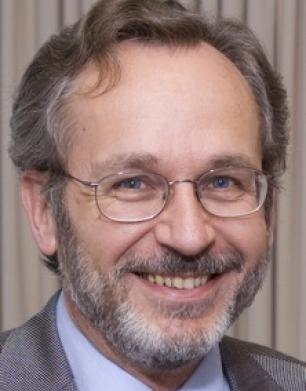
 Professor
Mechanical Engineering Diploma (Lyon, France), PhD (Paris, France), PEng
Office: Kaiser 4046
Phone: (604) 827-5654
Fax: (604) 822-5654
Email: pbk@ece.ubc.ca
Philippe Kruchten is Professor in the Department of Electrical and Computer Engineering at UBC. He holds an NSERC chair in design engineering. He joined UBC in 2004 after a 30-year career in industry, where he worked mostly in with large, software-intensive systems design in the domains of telecommunication, defense, aerospace and transportation. Some of his experience is embodied in the Rational Unified Process (RUP) whose development he directed from 1996 until 2003, when Rational Software was bought by IBM. RUP includes an architectural design method, known as “RUP 4+1 views”.
His current research interests still reside mostly with software architecture, and in particular architectural decisions and the decision process, as well as agile software engineering processes. Lately, he is focussed on the phenomenon called “technical debt”, the topic of his latest book: https://www.amazon.ca/Managing-Technical-Debt-Reducing-Development/dp/013564593X/
He is a founding member of IFIP WG2.10 Software Architecture. He’s the director of the Master of Engineering Leadership – Dependable Software Systems program at UBC: https://apscpp.ubc.ca/programs/mel/dependable-software-systems/.
Dr. Kruchten received his mechanical engineering diploma from Ecole Centrale de Lyon, and his doctorate degree in Information Systems from Ecole Nationale Supérieure des Télécommunications, Paris. He is a member of IEEE and ACM, and he is licensed as a Professional Engineer in British Columbia.
Teaching
Winter 2025No ELEC course(s) were found for W2025 term.Winter 2025
No ELEC course(s) were found for W2025 term.Winter 2025
No CPEN course(s) were found for W2025 term.Winter 2025
No CPEN course(s) were found for W2025 term.
Research Area
Research Group
- Computer and Software Engineering
Research Interests
- Architecture of large-scale, software-intensive systems
- Software development processes
- Software project management
- Technical Debt